
PCR vs. NGS: Understanding Two Essential Molecular Diagnostic Technologies
Understand PCR and next-generation sequencing (NGS), their clinical applications, workflows, limitations, and what laboratories should consider before investing.
Introduction
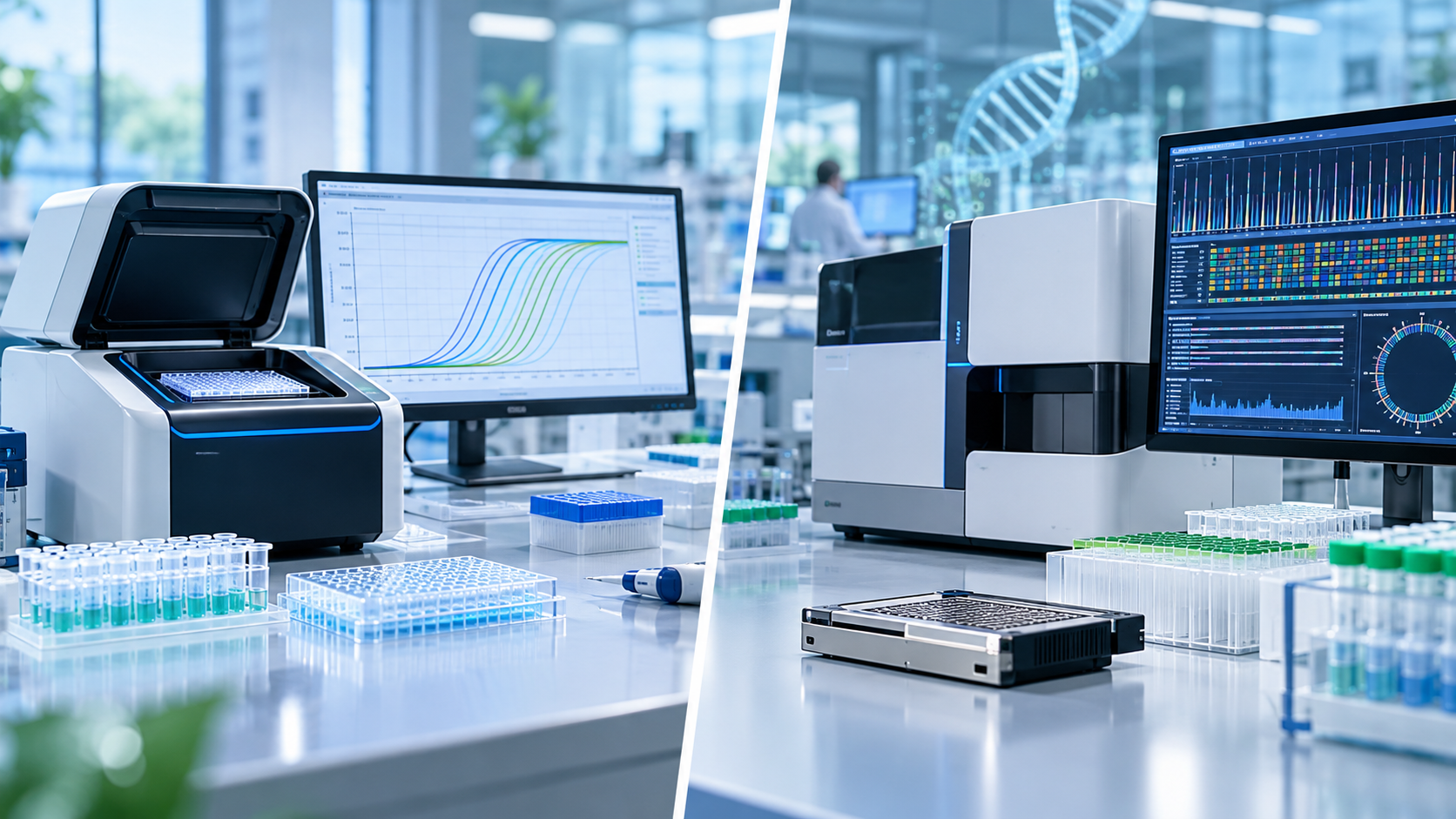
Polymerase chain reaction (PCR) and next-generation sequencing (NGS) are both important technologies in molecular diagnostics. They are sometimes discussed as competing options, but in practice they address different analytical needs and may be complementary within a laboratory.
A PCR assay typically answers a defined question about a specified nucleic-acid target. NGS can characterize sequences across multiple genes or much larger regions of DNA or RNA-derived material, depending on the assay. Understanding this difference is essential when choosing test methods, equipment, and supporting workflows.
What Is PCR?
PCR is a molecular method used to amplify selected DNA regions so they can be detected or analyzed. In real-time PCR (qPCR), amplification is monitored during the reaction through a fluorescent signal. When RNA is the starting material, reverse transcription can convert RNA into complementary DNA before amplification (RT-PCR or RT-qPCR, depending on the workflow).
PCR-based nucleic acid amplification tests are widely used in infectious-disease testing and other targeted molecular applications. Their strengths include a focused analytical question, well-defined workflows, and potentially fast turnaround. However, performance depends on specimen quality, target selection, contamination control, assay design, and validation.
What Is Next-Generation Sequencing?
NGS refers to a family of technologies that determine the order of nucleotides in many DNA fragments in parallel. Depending on the assay, an NGS workflow can sequence a targeted gene panel, an exome, a genome, or selected microbial genetic material. RNA-based workflows may include conversion to complementary DNA and additional preparation steps.
The ability to examine numerous genetic positions makes NGS valuable when clinically relevant variants are distributed across multiple genes, or when broader genetic characterization is required. It also generates more complex data. Library preparation, instrument operation, bioinformatics analysis, variant interpretation, and data management are all part of the workflow.
PCR vs. NGS: The Core Differences
Scope: PCR generally targets one or several predefined sequences; NGS can interrogate many sequences in a single assay. Analytical output: PCR may provide qualitative detection or quantitative estimates, whereas NGS typically generates sequence reads and variant-related data. Turnaround: targeted PCR workflows can often be shorter, while NGS typically includes more extensive preparation and analysis.
Complexity and resources: PCR workflows may have lower infrastructure and computational demands for targeted applications. NGS requires additional attention to sequencing quality, coverage, bioinformatics pipelines, data storage, and interpretation. Neither method is inherently superior for every clinical question.
Where Each Technology Fits
For a laboratory primarily detecting a small set of infectious targets, a validated PCR assay may be a practical choice. For services investigating multiple genes associated with inherited disorders, a clinically validated NGS panel may provide broader information. In oncology, some molecular workflows use PCR for a defined variant and NGS when a broader panel is needed; the method must match the validated clinical indication.
NGS should not be described as a universal replacement for PCR. Confirmatory testing, orthogonal methods, or additional analyses may be required in selected cases, depending on the assay, findings, and clinical context.
Quality, Validation, and Interpretation
Analytical validity is critical for both methods. For PCR, laboratories evaluate factors such as detection limits, inclusivity or exclusivity where relevant, reproducibility, and contamination prevention. For NGS, important measures include coverage, read quality, sensitivity for relevant variant classes, bioinformatics validation, and the limitations of the genomic regions assessed.
The US Food and Drug Administration notes that NGS creates distinct analytical and regulatory challenges because a single test can examine very large numbers of variants. Laboratories should distinguish research-use-only workflows from tests appropriately validated and authorized or otherwise permitted for their intended clinical use under applicable requirements.
Choosing a Molecular Diagnostics Platform
The procurement decision should start with the clinical question and expected testing volume. Evaluate the assay menu, sample requirements, throughput, turnaround time, laboratory space, staff expertise, quality-control processes, software support, and cost per reportable result.
For NGS in particular, consider whether the laboratory has adequate bioinformatics capabilities and access to qualified interpretation. For PCR, assess the required contamination-control workflow and the choice between singleplex and multiplex testing. Supplier training, documentation, and after-sales support are relevant for both approaches.
Conclusion
PCR and NGS serve different but complementary roles in molecular diagnostics. The most effective laboratory strategy matches the testing method to the clinical purpose while ensuring analytical quality, manageable workflows, and sustainable operating costs.
LUXMED can help laboratories explore molecular diagnostics requirements and evaluate suitable equipment categories. Discuss the intended testing applications before selecting a specific system or assay.
Frequently Asked Questions
Is NGS more accurate than PCR?
Not in every application. Accuracy depends on the test design, target, variant type, analytical validation, and quality of the sample.
Can PCR and NGS be used in the same laboratory?
Yes. They can support different test menus and may complement one another within a broader molecular diagnostics service.
Does every NGS test diagnose a medical condition?
No. The clinical utility and regulatory status of an NGS assay depend on its intended use, evidence, and validation.
References and editorial sources
- CDC, Testing and Respiratory Viruses — https://www.cdc.gov/respiratory-viruses/prevention/testing.html
- FDA, Precision Medicine / NGS Tests — https://www.fda.gov/medical-devices/in-vitro-diagnostics/precision-medicine
- FDA, Analytical Validation of NGS-Based IVDs — https://www.fda.gov/regulatory-information/search-fda-guidance-documents/considerations-design-development-and-analytical-validation-next-generation-sequencing-ngs-based
Need help choosing equipment?
Our experts will help you find the right solution for your laboratory.
Get a Consultation